

 Toute l'actualité
How can we ensure that projects generating certified carbon credits also create tangible value for the territories that host them? In ecosystem restoration projects, long-term success depends not only on effective carbon sequestration, but also on the engagement of local communities and the creation of sustainable economic opportunities. This is precisely the purpose of benefit sharing. Today, this principle has become a structural condition for the credibility and durability of carbon projects. At Reforest’Action, it is embedded from the project design phase and supported by a rigorous evaluation framework to ensure that carbon finance genuinely contributes to local development.

Benefit sharing in certified carbon projects
A principle of equity at the core of carbon finance
Within projects certified under international standards such as Verra (VCS) or Gold Standard, benefit sharing refers to the set of mechanisms designed to distribute the benefits generated by a project equitably among its stakeholders, particularly local communities and Indigenous peoples. At a time when the social integrity of projects has become central to the credibility of voluntary carbon markets, these mechanisms play a structuring role in both project design and governance. This approach acknowledges that the success of a carbon sequestration project depends on a broader ecosystem of actors and activities, and that benefits must be distributed fairly to ensure long-term sustainability.
Carbon standards and national frameworks: towards stronger regulation of benefit sharing
While they do not impose a universal percentage of benefit sharing applicable to all projects, carbon standards have progressively strengthened the governance of benefit sharing by incorporating specific requirements into their methodological frameworks and social and environmental safeguard systems.
Under Verra’s VCS 5.0 standard, the benefit-sharing mechanism must be co-designed with land rights holders, local communities, and Indigenous peoples prior to project implementation, and subsequently implemented and monitored throughout the project lifecycle. These stakeholders are thereby recognized as full participants in the benefit sharing mechanism.
The standard also requires a high level of financial transparency. Project developers must disclose to participants, at the design stage, projected revenues and expected costs, and subsequently provide annual updates on operational costs and actual or projected revenues.
The mechanism itself must be formalized and contextualized: it must specify the nature of benefits (monetary, in-kind, or a combination), their distribution timeline, and be adapted to the local context, communicated through culturally appropriate means, and aligned with applicable national regulations. It must also remain accessible to stakeholders and include provisions to account for revenue variability, particularly in relation to carbon market fluctuations.
Finally, Verra introduces a critical distinction between activities necessary for project implementation and the benefits actually shared. Project operational costs, infrastructure required for implementation, worker salaries, and environmental risk mitigation measures cannot be considered part of benefit sharing. This clarification strengthens both the transparency and credibility of benefit-sharing mechanisms.
In parallel, several countries have recently introduced more prescriptive national frameworks on benefit sharing, explicitly defining value distribution mechanisms—and in some cases, the share of revenues allocated to local communities. This trend, particularly visible in East Africa and the Indian Ocean region, reflects a broader movement toward stronger regulation of benefit sharing within carbon markets.
Benefit sharing as a condition for the success of restoration projects
In ecosystem restoration projects, benefit sharing is not merely a methodological requirement associated with carbon standards—it is also an operational condition for the success and long-term sustainability of initiatives on the ground.
These projects are embedded in complex territorial dynamics and rely on long-term commitments from local communities. Agroforestry projects, in particular, involve gradual changes in agricultural practices, the long-term integration of trees into production systems, and the collective management of new natural resources. Their success therefore depends directly on the engagement of local stakeholders and their ability to adopt and sustain these transformations over time. Active community participation thus becomes a key determinant of project viability, as it conditions both the adoption of introduced practices and their long-term continuity beyond the initial support phases.
In this context, benefit sharing plays a structuring role. By ensuring a fair distribution of the value generated by the project, it helps align economic incentives across stakeholders and strengthens local ownership. Capacity building for farmers, the inclusion of women in productive systems, and the structuring of collective initiatives at the territorial level all play a central role in sustaining implemented practices and amplifying environmental and socio-economic impacts.
However, benefit-sharing mechanisms often remain insufficiently structured. The report Beyond Beneficiaries – Fairer Carbon Market Frameworks by The Nature Conservancy highlights that some local communities bear costs that are not fully accounted for in project economic models, or receive only a marginal share of the value generated. Asymmetries in access to information, land rights, or negotiation capacity may also lead to situations of value capture to the detriment of local actors. These findings are driving a shift in benefit-sharing approaches toward more inclusive governance models and the recognition of communities as full partners rather than passive beneficiaries.

Reforest’Action’s approach: structuring benefit sharing from project design
While international standards provide a framework for benefit sharing, its concrete implementation largely depends on project developers’ methodological choices. At Reforest’Action, this dimension is structured from the design phase to ensure sustainable local value creation.
Direct contributions embedded in the project budget
Our evaluation of benefit sharing is grounded in a principle of transparency: clearly distinguishing the resources required for project implementation from those allocated to benefit sharing with local communities. This distinction avoids any confusion between investments necessary for generating carbon impact and mechanisms designed to redistribute value.
Accordingly, financial resources directly mobilized for project implementation (such as purchasing seedlings or operating nurseries), and contributing directly to carbon sequestration, are not considered part of benefit sharing.
Benefit sharing instead concerns co-benefits—contributions that directly improve living conditions and economic prospects for local communities—taking several complementary forms:
- Direct monetary contributions: communities participating in projects may receive direct financial compensation linked to their involvement, for instance for maintaining planted trees or transitioning agricultural practices over the long term. Monetary benefits are carefully structured: payments are targeted and regulated to avoid disrupting local economies or social dynamics. They may take the form of partial compensation for labor provided during project establishment, combined with an in-kind contribution from farmers. This approach recognizes participant engagement while preserving intrinsic motivation beyond financial incentives.
- Direct non-monetary contributions: projects may also provide equipment, tools, and agricultural inputs to improve practices and productivity.
- Community-level contributions: part of the project’s benefits is allocated to collective initiatives (often via village funds), such as building wells, improving local infrastructure, or supporting agricultural cooperatives.
These contributions are embedded in the project’s initial budget and delivered from the early years of implementation. This reflects an expanded vision of benefit sharing: value creation for communities does not depend solely on future carbon revenues, but begins from the earliest project stages, supporting local economic dynamics, building trust, and ensuring sustained engagement.
Value creation through agricultural value chains and practice transformation
In agroforestry projects in particular, value creation extends beyond financial redistribution mechanisms. The integration of trees into agricultural systems enables diversification of income sources—through fruit production, non-timber forest products, or other commodities—while also improving yields through ecosystem services and fostering the development of local value chains for processing and commercialization.
Such projects become drivers of territorial development and catalysts for sustainable agricultural activity even before generating their first carbon credits. In this model, most of the value generated is captured locally, with carbon revenues acting as a complementary stream.
Carbon credit sharing: a complementary redistribution mechanism
Finally, benefit sharing includes a mechanism for distributing carbon credits generated by the project, whereby a portion is allocated to local communities. These revenues fall into a specific category: market-dependent benefits derived from the issuance, trading, and sale of carbon credits on voluntary markets. They constitute an additional income stream complementing other value-creation mechanisms.
The distribution of these revenues depends on the institutional and legal context in which the project operates. It may involve multiple stakeholders—land or carbon rights holders, communities, developers, investors, or public authorities—depending on national frameworks and governance structures. Increasingly, these mechanisms are regulated through legal or policy frameworks defining allocation rules and recognition of carbon rights.
By nature, the economic value of carbon credits remains variable. It depends not only on project performance and verified outcomes, but also on broader market dynamics, including price trends, demand levels, regulatory changes, and geopolitical context. In other words, these revenues are partly determined by factors external to the project itself.
At Reforest’Action, allocating a share of carbon credits to communities integrates these market dynamics into a territorial redistribution logic. The revenues generated can support village funds financing locally defined collective projects—such as infrastructure, agricultural initiatives, or community programs—thereby strengthening local development dynamics. This mechanism creates a durable alignment of interests: the greater the project’s measurable environmental impact and market value, the greater the resources redistributed to communities. However, it remains a complementary lever. By nature delayed and dependent on market conditions, these revenues arrive too late to support initial community engagement and practice adoption, and therefore cannot replace other value-creation mechanisms.
Structuring benefit sharing over time: between immediate incentives and long-term alignment
Taken individually, each of these mechanisms addresses a specific dimension of benefit sharing. Their effectiveness, however, depends on how they are articulated over time. An approach relying solely on carbon revenues is not operationally viable. The time required to generate and monetize credits—often several years—does not meet the immediate economic needs of communities nor support early-stage engagement.
Benefit sharing therefore relies on a combination of complementary mechanisms: non-conditional short-term benefits, essential to generate interest, facilitate recruitment, and support transitions in practices (including in cases of temporary income loss), and performance- or impact-based benefits, which operate over the medium to long term to ensure sustained alignment of stakeholder interests.
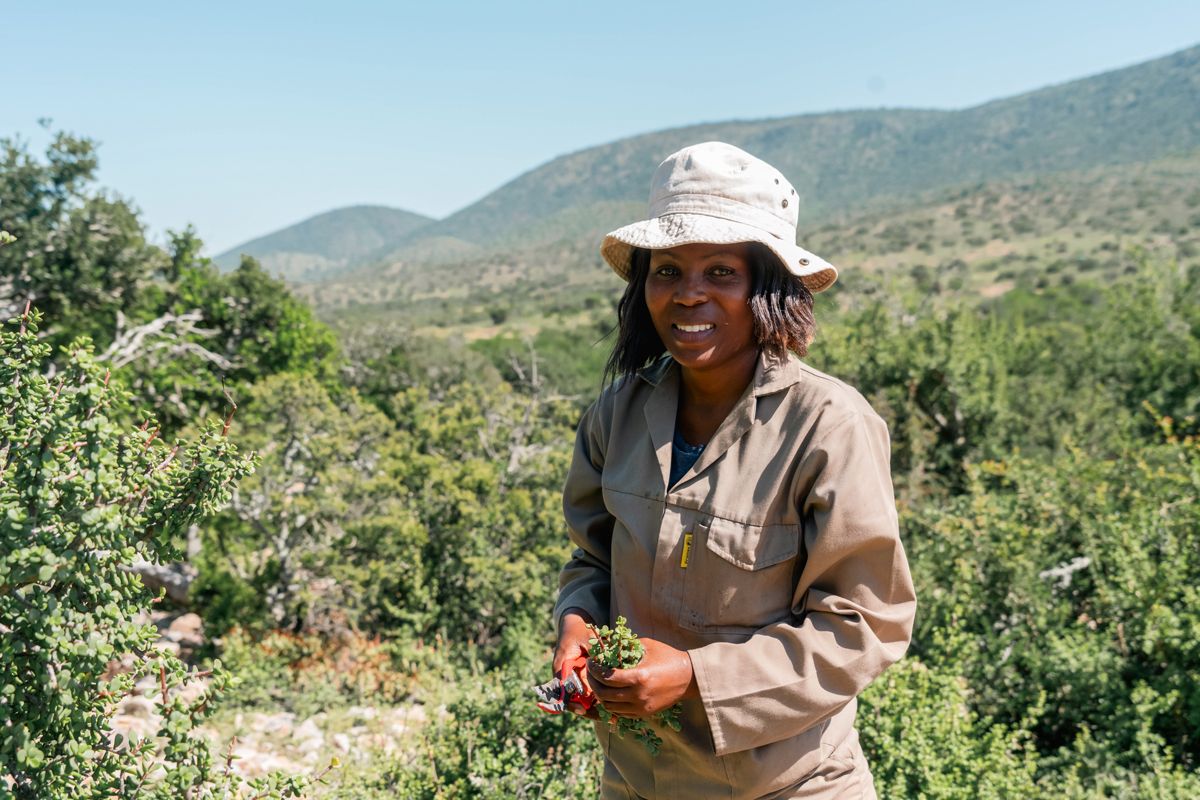
Benefit sharing is now a cornerstone of the integrity of carbon projects. By ensuring an equitable distribution of the value created, it strengthens both environmental credibility and social legitimacy. At Reforest’Action, this approach is grounded in a simple conviction: the success of ecosystem restoration projects depends on the prosperity of the territories that sustain them. By embedding benefit sharing at the heart of project design and rigorously evaluating its implementation, carbon finance can, beyond its contribution to climate mitigation, fully support sustainable development pathways at the local level.