


 Toute l'actualité
In Haute-Savoie, the mid-mountain forests and Alpine foothills face the combined impacts of climate change, storms and silvicultural legacies inherited from the past, much like forests elsewhere in France. In Fillière and La Roche-sur-Foron, Reforest'Action is supporting the Groupement Forestier du Chesnet in a long-term forest restoration journey, built around an approach that responds to the specific ecological dynamics of each forest stand. Since 2021, the projects developed through this partnership have embodied a demanding vision of forest restoration: preserving natural regeneration processes already at work, enhancing forest diversity, and planting only where the ecosystem genuinely requires it.
A partnership built for the long term
Since 2021, the collaboration between Reforest'Action and the Groupement Forestier du Chesnet has led to the implementation of twelve restoration projects across the municipalities of Fillière and La Roche-sur-Foron, covering 79 hectares and supporting the restoration or planting of more than 113,000 trees. Today, the maturity of this partnership is reflected in the gradual integration of projects certified under France's Label Bas-Carbone, demonstrating a shared commitment to embedding selected initiatives within a recognised methodological framework for quantifying and monitoring their climate benefits.
The continuity of this partnership is one of its greatest strengths. Rather than delivering isolated interventions, it makes it possible to build a genuine long-term restoration strategy across an entire privately owned forest estate. For companies seeking to support high-impact environmental projects, this long-term perspective is essential: it ensures that their contribution becomes part of a coherent territorial strategy, led by committed local forest managers and monitored over time.
The Groupement Forestier du Chesnet embodies this philosophy. Established as a family-led initiative, it does not view the forest as a simple financial asset, but as a living heritage to be protected, improved and passed on to future generations.
This vision is reflected in a constant presence on the ground. Monitoring stand dynamics, identifying future crop trees, assessing the outcomes of silvicultural interventions, or engaging neighbouring forest owners to encourage more coherent landscape-scale management are all integral parts of their daily work.
Here, forest restoration is not managed from behind a desk. It is shaped season after season, through continuous observation and close engagement with the forest itself. This hands-on approach is one of the key drivers of the partnership's success: restoring forests requires not only sound ecological knowledge, but also the ability to commit to long-term stewardship.
As the Groupement Forestier du Chesnet puts it:
"Our ambition is to pass on forests that are healthier than those we inherited. Sometimes that means planting; sometimes it means supporting natural regeneration. But it always means managing forests in a way that respects their natural functioning while preparing them for the challenges ahead."
Working with the forest's own dynamics
The projects carried out in Fillière and La Roche-sur-Foron extend far beyond individual forest plots. They form part of a broader effort to progressively restore a privately owned forest landscape. Year after year, the Groupement Forestier du Chesnet brings together neglected or under-managed parcels, gradually restoring management coherence while strengthening the resilience of the wider forest landscape.
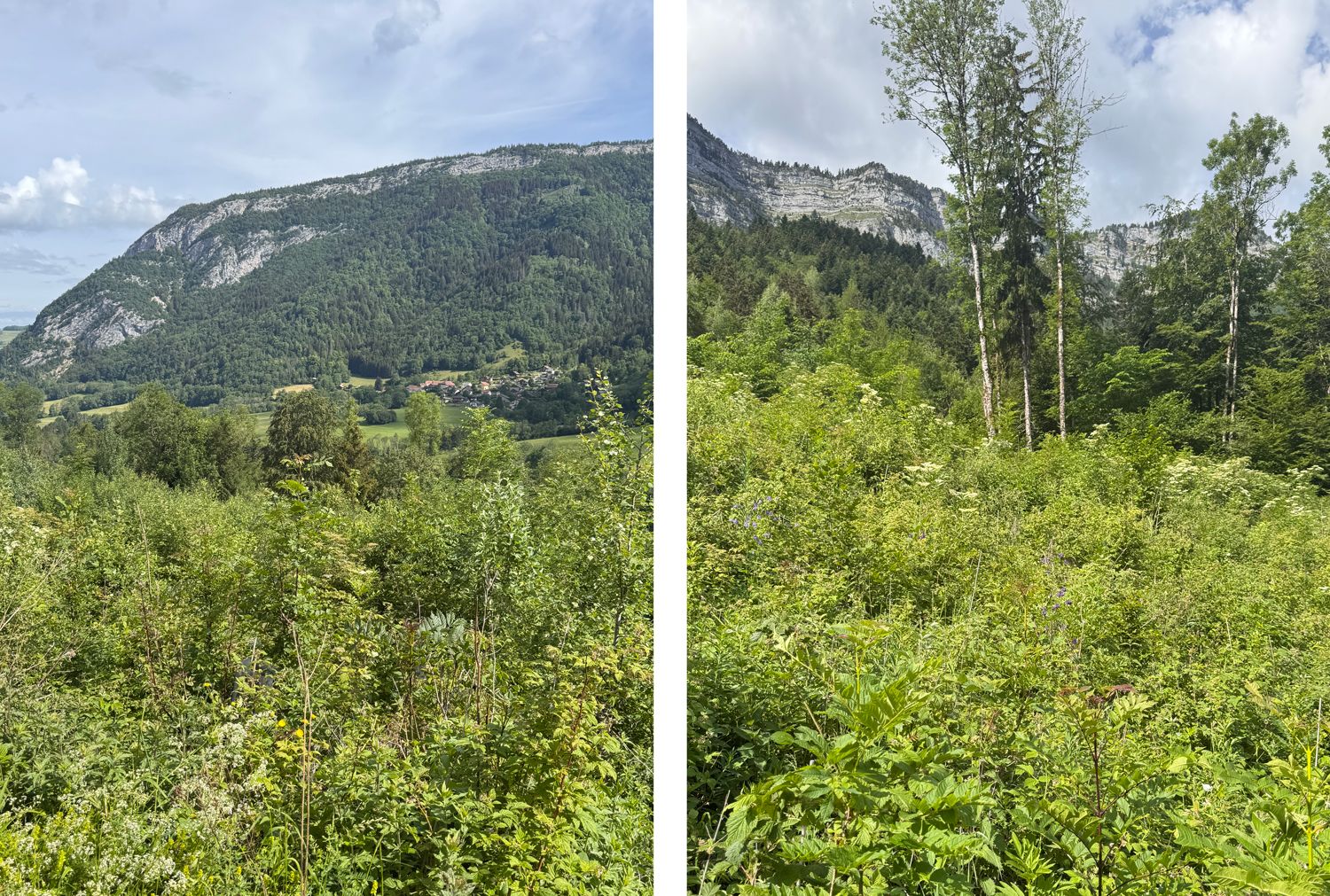
Across both sites, mature Norway spruce and broadleaved trees dominate the canopy. Beneath it, however, a diverse new generation of trees has already established itself naturally. Their development is often constrained by limited light availability and competition from overstorey trees. The objective of silvicultural intervention is therefore not to replace this natural process, but to unlock its potential.
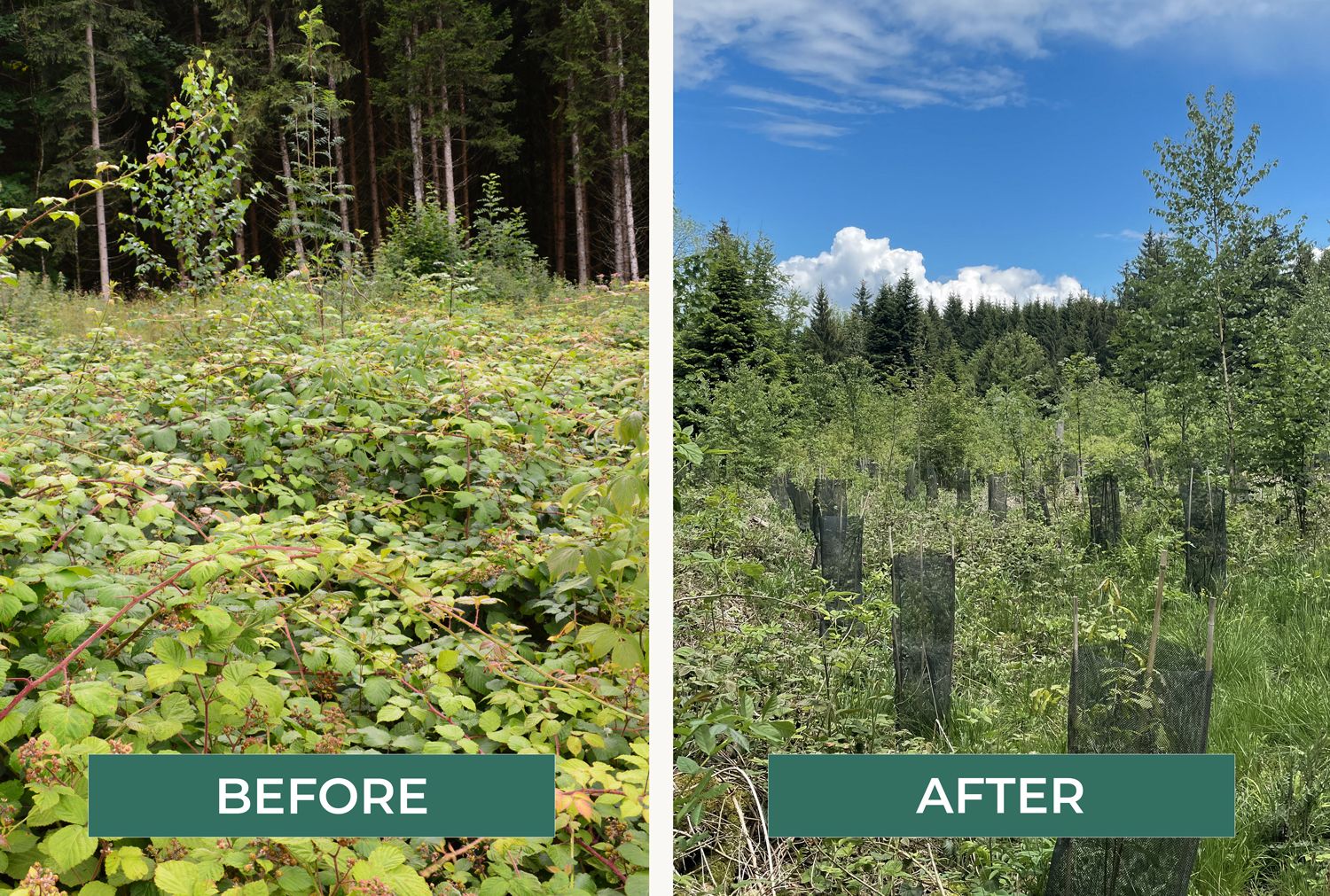
Every intervention begins with a detailed assessment of the existing stand. Rather than starting from scratch, the objective is to support naturally regenerated seedlings and saplings, enabling them to develop under more favourable conditions.
This is precisely the role of Assisted Natural Regeneration (ANR). Rather than introducing new trees systematically, ANR focuses on helping naturally established regeneration thrive. Forest managers create the conditions required for young trees to grow by improving access to light and space through carefully targeted silvicultural operations tailored to the characteristics of each stand.
One of the projects carried out in La Roche-sur-Foron illustrates this approach particularly well. More than 29,000 naturally regenerated trees are being supported, while 1,000 nursery-grown trees are being planted to complement the existing regeneration where they provide additional ecological value—whether by increasing species diversity, enriching specific areas or strengthening the long-term resilience of the stand.
Planting therefore remains an essential restoration tool. It is simply used where ecological assessments demonstrate that it will deliver the greatest benefit. This complementarity between Assisted Natural Regeneration and targeted enrichment planting reflects Reforest'Action's broader philosophy: adapting restoration methods to the actual needs of each forest, rather than applying a single solution to every situation.
Ecological diversity as a foundation for resilience
In a context of climate change, increasingly frequent droughts, pest outbreaks and natural disturbances, forests composed of only a limited number of tree species are inherently more vulnerable. By contrast, diversity—in terms of species composition, stand structure and age classes—helps spread risk and enables forests to maintain their ecological functions over time.
Strengthening this diversity is therefore one of the core objectives of the projects carried out in Fillière and La Roche-sur-Foron. Forest management focuses on encouraging naturally underrepresented species to establish themselves within the stand, allowing a richer and more balanced forest ecosystem to develop.
Assisted Natural Regeneration plays a central role in this process by favouring species that are already well adapted to local environmental conditions. Naturally regenerated seedlings are themselves the result of successful establishment within the site. They have developed under the combined influence of local soils, exposure, moisture availability and competition from surrounding vegetation. Supporting their growth means recognising this adaptive potential and enabling it to flourish.
Beyond the individual trees themselves, Assisted Natural Regeneration also helps preserve a locally adapted genetic heritage. Originating from the existing forest stands, these young trees are the product of natural selection processes operating over successive generations. Preserving this local genetic diversity strengthens the forest's capacity to cope with climate change, emerging pests and diseases, and the many uncertainties that will shape tomorrow's forests.
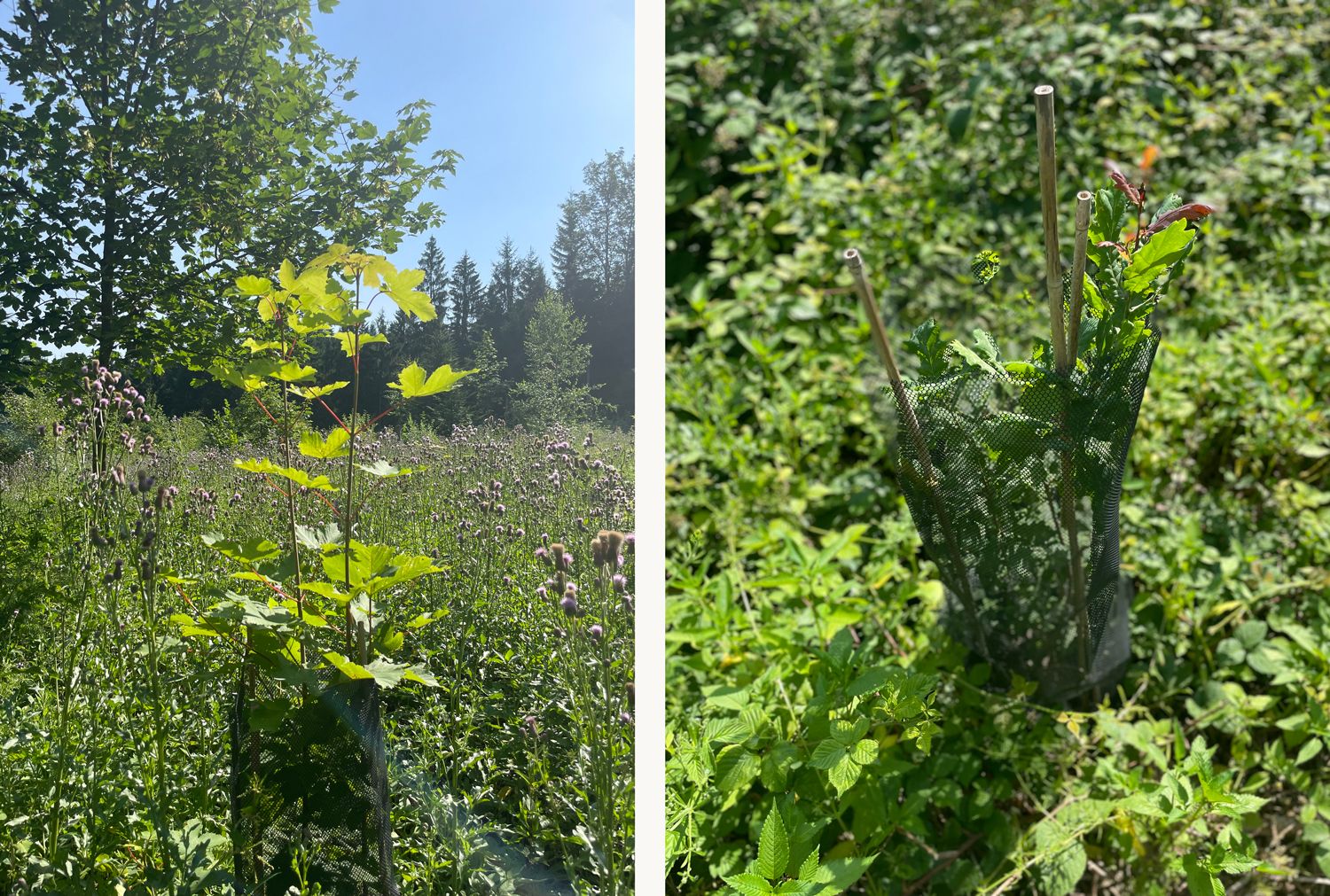
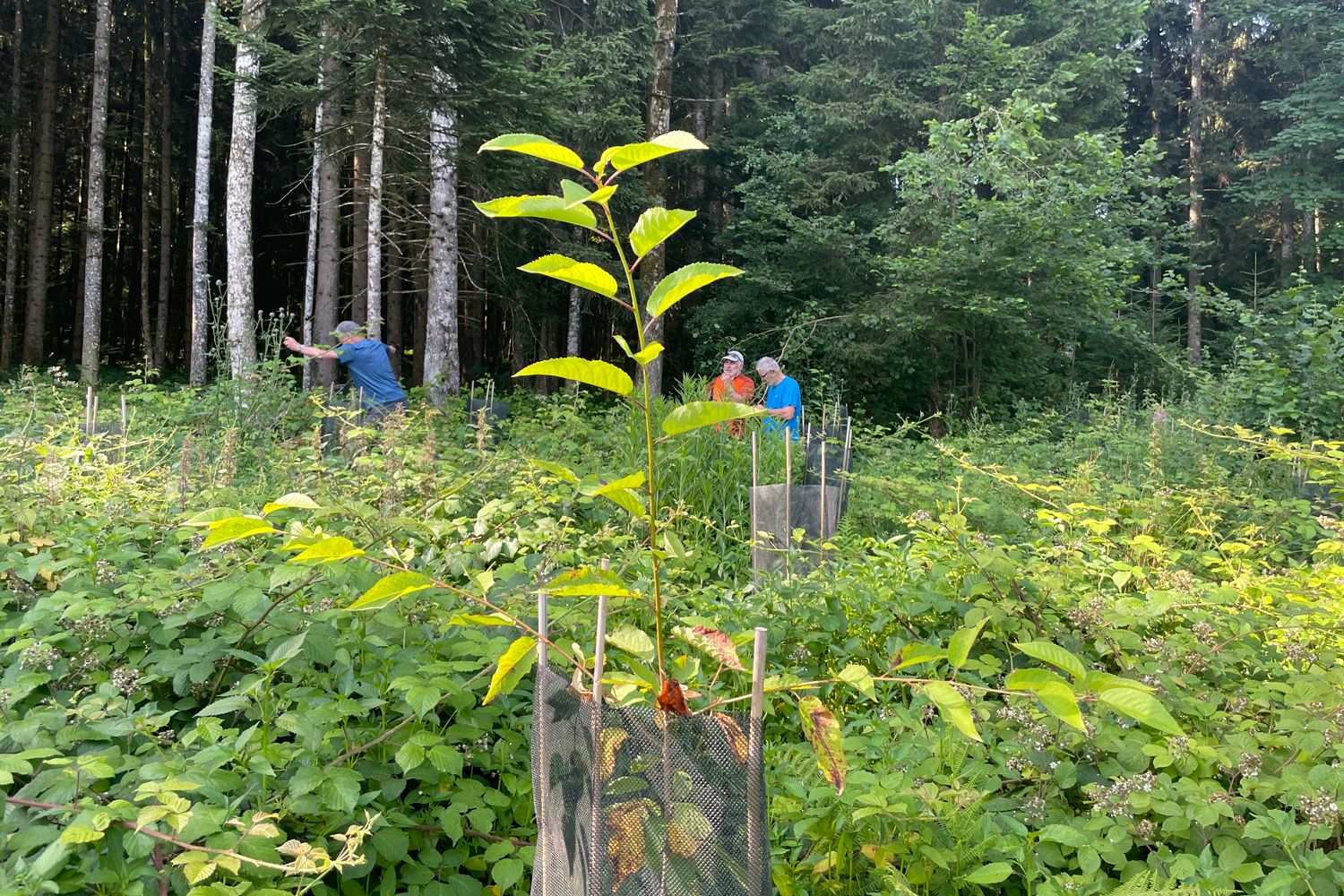
Where natural regeneration proves insufficient, or where the stand would benefit from greater diversity, carefully targeted enrichment planting complements these natural processes. Trees are planted selectively within canopy gaps, either in small clusters or discrete planting groups depending on the characteristics and management objectives of each area.
Across Fillière and La Roche-sur-Foron, natural regeneration is primarily composed of silver fir, European beech, Norway spruce, oak and hornbeam. Enrichment planting introduces complementary species—including sweet chestnut, wild cherry, rowan, maple, lime, cedar, Douglas fir and larch—to broaden the ecological diversity of the forest.
The objective is not to set natural regeneration and planting against one another, but to use each where it delivers the greatest ecological value. Together, they contribute to diversifying species composition, strengthening stand structure and enhancing the forest's capacity to adapt to a changing climate.
Over time, this progressive diversification should also lead to the development of uneven-aged forest stands, making continuous-cover forestry possible without resorting to clear-cutting.
Ultimately, the ambition is not simply to increase the number of trees. It is to develop forest ecosystems that are more diverse, more stable and better equipped to sustain the wide range of ecosystem services on which society depends: carbon storage, biodiversity conservation, soil protection, water regulation, the sustainable production of timber, and the preservation of living forest landscapes.
A shared ambition for the future of forests
The strength of these projects also lies in the quality of the partnership between Reforest'Action and its local implementation partner. The Groupement Forestier du Chesnet brings deep knowledge of the land, long-term stewardship and the practical capacity to carry out restoration work on the ground. Reforest'Action contributes strategic support, funding, rigorous project oversight and the ability to mobilise companies around high-impact forest restoration initiatives.
This complementarity is essential. High-integrity forest restoration cannot be designed remotely. It depends on detailed field assessments, informed silvicultural decision-making, a thorough understanding of local ecological dynamics and continuous monitoring throughout implementation.
Conversely, forest managers' ambitions require financial resources, technical structuring and long-term visibility if they are to be implemented at the scale needed to maximise their ecological impact.
In the case of the Groupement Forestier du Chesnet, Reforest'Action's support enables the acceleration of initiatives that the owners had long intended to undertake: increasing species diversity, supporting natural regeneration, strengthening climate resilience and restoring degraded forest areas.
This capacity to accelerate action is fundamental. By providing committed forest managers with the resources to move faster and further, Reforest'Action helps deliver ecological, climatic and social benefits to local territories sooner than would otherwise be possible.
Engaging companies through tangible forest action
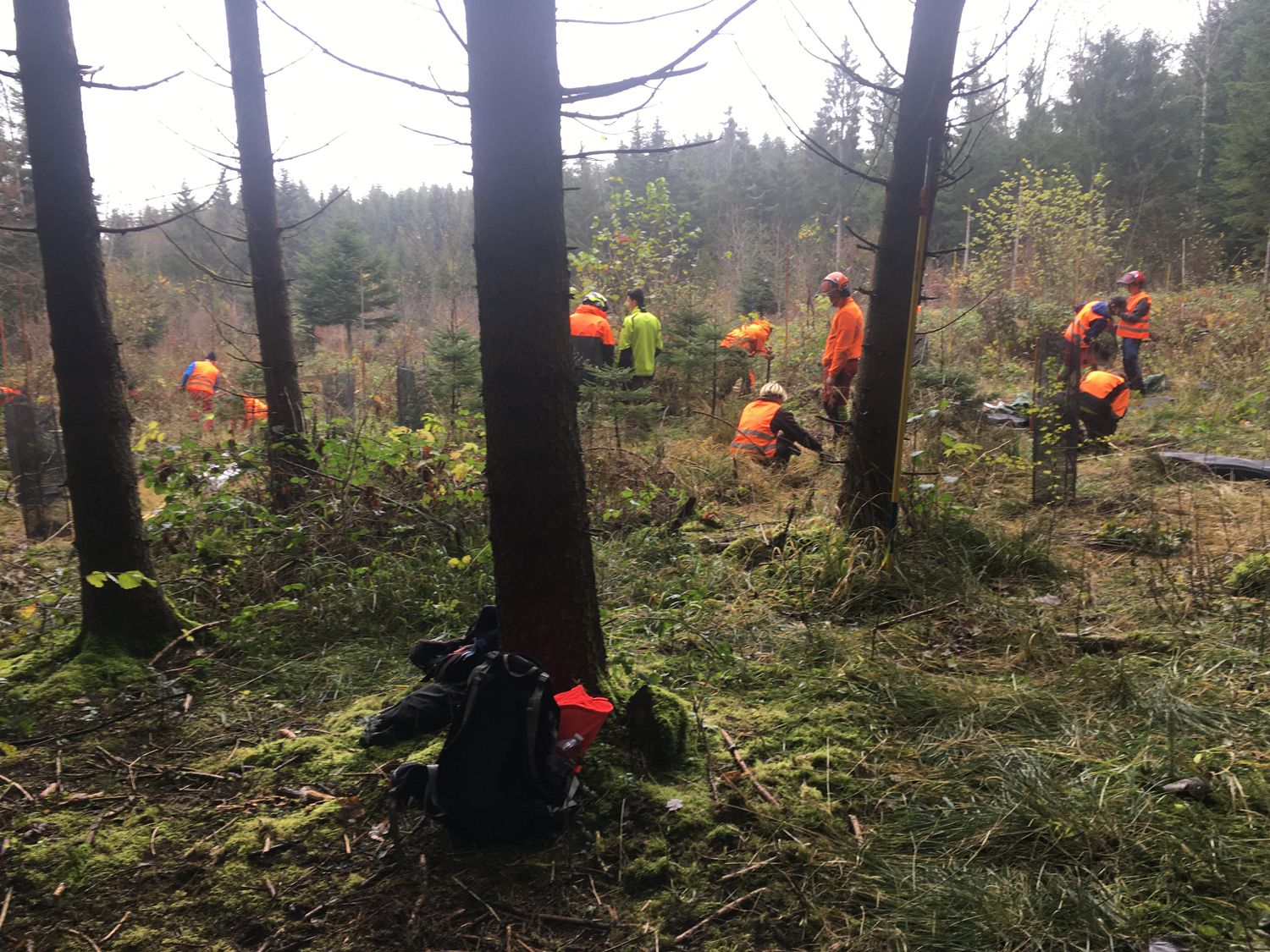
The projects carried out with the Groupement Forestier du Chesnet also play an important role in raising awareness. Several participatory field days have been organised with companies contributing to the projects, including Kiabi and Veolia. These events have enabled employees—and, in some cases, their children—to gain first-hand insight into forest ecosystems and actively participate in restoration activities.
These experiences provide a tangible understanding of the complexity of forest restoration. Participants discover how a forest stand is assessed, how naturally regenerated trees are identified and selected, how light, soil and vegetation interact, and why restoring a forest is not synonymous with planting trees.
For companies, this experience goes well beyond symbolic environmental engagement. It demonstrates that supporting a forest restoration project is not simply about financing a given number of trees. It is about contributing to a scientifically grounded ecological approach, implemented by experienced forest managers, rooted in a specific landscape and designed to generate lasting environmental benefits.
This perspective is particularly relevant for business leaders facing growing expectations regarding the credibility of their environmental commitments. Forest projects can no longer be viewed as standalone communication initiatives. They must form part of a coherent climate and biodiversity strategy, supported by robust, traceable projects that respond to the ecological realities of each territory.
Embracing the complexity of forest restoration
The projects implemented in Fillière and La Roche-sur-Foron illustrate a fundamental principle: effective forest restoration is not about applying a single solution everywhere, but about selecting the right intervention for each ecological context.
Where natural regeneration already exists, it should be identified, protected and supported. Where it is insufficient, targeted planting can complement natural processes. Where forest diversity is lacking, interventions should encourage a broader range of species. And where forest stands have become degraded, they must be reintegrated into a coherent long-term management strategy.
Such an approach requires far greater precision than restoration based solely on tree planting. It demands continuous field presence, a deep ecological understanding of forest dynamics and strong relationships built on trust between all stakeholders.
This is precisely what the partnership between Reforest'Action and the Groupement Forestier du Chesnet makes possible: a shared vision of the forest as a living, multifunctional, productive, resilient and enduring ecosystem.
Looking beyond individual projects
The projects carried out in Haute-Savoie demonstrate that high-integrity forest restoration is never about applying a single solution. It is a long-term endeavour, led by forest managers who know their stands intimately, observe their evolution over time and continuously adapt their management to the ecological realities of each site.
Through its partnership with the Groupement Forestier du Chesnet, Reforest'Action champions an approach to restoration built on scientific rigour, long-term commitment and deep local expertise. In this model, planting remains an essential tool—but only one among many. Assisted Natural Regeneration, targeted enrichment planting and continuous adaptive management each have a role to play, depending on the ecological needs of the forest.
Ultimately, restoring forests is not about maximising the number of trees planted. It is about rebuilding resilient ecosystems capable of adapting, evolving and continuing to provide the ecological, climatic and social benefits on which our societies depend. It is this philosophy—grounded in long-term stewardship, trust and ecological understanding—that lies at the heart of the partnership between Reforest'Action and the Groupement Forestier du Chesnet, and of every forest they are helping to restore together.