


 Toute l'actualité
As climate change accelerates, companies whose business depends on natural raw materials face an increasingly complex equation: securing their supplies while meeting rising regulatory, climate-related, and societal expectations. In this context, insetting is emerging as a major strategic lever—at the intersection of economic performance, operational resilience, and environmental impact.
Reforest’Action develops insetting projects designed to durably strengthen the resilience of agricultural and water supplies, at the very heart of corporate sourcing strategies and reporting frameworks, notably the EUDR and SBTi FLAG. More than a mechanism for environmental contribution, insetting is an integrated approach, designed to act directly within value chains—where the most material risks and opportunities are concentrated.
Supporting the transition to regenerative models
Today, more than a third of the Earth’s land surface is devoted to agriculture and livestock farming. Yet soil degradation, biodiversity loss, increasing water scarcity, and the growing frequency of extreme weather events are profoundly weakening global agricultural sectors. Strengthening the resilience of these value chains has become a strategic imperative.
Reforest’Action supports companies in transitioning their agricultural supply chains towards regenerative models. The impact is threefold: securing long-term sourcing, regenerating agroecosystems, and supporting the communities that depend on them. This approach rests on a strong conviction: the economic sustainability of supply chains is inseparable from the health of the ecosystems from which they originate.
At the core of this approach, agroforestry stands out as a multifunctional solution. Carbon sequestration, crop protection, improved soil fertility, natural pest regulation, enhanced water resilience, and additional income streams for farmers—its benefits are many. Implementation, however, requires in-depth expertise, both silvicultural and agronomic, including species selection, planting design, and adaptation to local farming practices. Combined with other levers of regenerative agriculture, agroforestry becomes a high-impact model, capable of transforming value chains over the long term.
Agroforestry experts since 2010, we deliver projects in Europe and tropical regions, across more than fifteen agricultural commodities, grounded in the operational realities of businesses.
Structured programmes—from strategy to the field
To address the wide range of corporate challenges, we offer three complementary programmes.
The Regenerative Agriculture Programme develops end-to-end projects within companies’ value chains. It includes a pre-project study phase—diagnosis, design, and impact projections—followed by operational implementation and monitoring that combines field surveys with remote sensing tools. These projects are deployed in France, across Europe, and in tropical regions, with a clear objective: strengthening the resilience of agricultural supplies in the face of climate, economic, and environmental risks.
The Monitoring and Support Programme responds to growing needs around compliance, reporting, and impact valuation. It measures the tangible outcomes of insetting initiatives and integrates results into key reference frameworks such as SBTi FLAG, SBTN, the EUDR, and the CSRD. This approach is based on long-term analysis of forest and agricultural dynamics, impact measurement combining field and satellite data, and training local teams in data collection.
Lastly, the Water Replenishment Programme aims to strengthen water resilience for sites and production regions. At watershed scale, Reforest’Action identifies and implements forestry projects that durably improve water availability. These projects draw on recognised scientific models and are tracked through a combination of satellite indicators and field measurements.
Measuring, steering, and showcasing impact
The long-term viability of regenerative models depends on the ability to measure impacts reliably and transparently. We are convinced that only a hybrid approach—combining the irreplaceable accuracy of field monitoring with the spatial and temporal coverage of remote sensing—can meet today’s requirements from companies and investors.
To that end, we have invested in developing our own impact measurement tools and in deploying a digital MRV (Measuring, Reporting and Verification) platform. It enables data visualisation, anticipation of regulatory requirements, and easier integration of results into corporate reporting and communications. This steering capability is a key factor in securing investments, demonstrating the credibility of actions undertaken, and strengthening stakeholder trust.
Insetting in action: our flagship programmes
This vision is now embodied in a portfolio of strategic insetting programmes, illustrating our ability to deploy high-impact regenerative solutions—operationally secure and aligned with companies’ and investors’ performance and reporting requirements.
Transforming a cotton supply chain in India
To address the increasing vulnerability of the cotton sector to climate and social risks, Kiabi chose to act directly within its value chain. Since 2023, the company has been deploying, with Reforest’Action, a regenerative agriculture project in the state of Odisha, India, integrated into its organic cotton sourcing.
The project is based on the introduction of agroforestry systems and agroecological practices on cotton plots cultivated by a partner producers’ cooperative. By combining trees, crops, and sustainable soil management levers, the initiative aims to strengthen farm resilience, improve soil fertility, and diversify agricultural incomes.
Deployed across 520 hectares and benefiting 1,250 producers, the project combines agronomic performance, secured raw material volumes, and measured environmental impacts. It contributes directly to Kiabi’s climate trajectory objectives by addressing land-use emissions and carbon sequestration within the value chain.

Strengthening a natural rubber supply chain in Brazil
In the Brazilian Amazon, Reforest’Action supports an international company engaged in sourcing natural rubber from traditional forest-based systems. In a context of increasing deforestation and progressive land degradation—particularly linked to cattle ranching—the project aims to deploy a rubber production model that is both sustainable and economically attractive for rubber tappers, offering a more compelling alternative to cattle ranching and thereby contributing to the preservation of the surrounding Amazon forest.
The initiative is based on the restoration of degraded land and supports the development of productive agroforestry stands, using the Assisted Natural Regeneration method. This approach combines plot protection, targeted interventions, and enrichment planting with locally adapted productive species offering strong economic potential.
Deployed across several priority areas in the state of Acre, the project is implemented with the direct involvement of rubber-tapper families, placed at the heart of the approach. A payment for ecosystem services mechanism secures their engagement and helps offset transition costs and the opportunity cost of not converting land.
Impact monitoring combines field observations and satellite analysis, with the objective of consolidating a replicable model that reconciles supply chain security with local economic resilience.

Adapting an aromatic supply chain to water scarcity in Morocco
In northern Morocco, in the Khémisset region, Reforest’Action supports Maison Francis Kurkdjian and its essential oils supplier in transforming their flower-to-fragrance production chain. In a context of growing water stress, the project’s central challenge is to ensure the long-term viability of crops that are particularly sensitive to water availability.
The intervention begins with an in-depth diagnostic of the farm, agricultural practices, and the value chain linked to essential oil distillation. Technical itineraries, energy needs, the use of residual biomass, and the hydrological functioning of the local ecosystem are analysed to identify the most relevant adaptation levers.
Based on this assessment, the project explores regenerative agriculture solutions suited to local constraints, notably the selection of water-efficient plant species and the integration of agroforestry designs compatible with resource scarcity. By planting 2,900 linear meters of protective hedges, which will take place over six years, the objective is to strengthen production resilience while durably securing upstream supply.

Strengthening the resilience of a vineyard in France
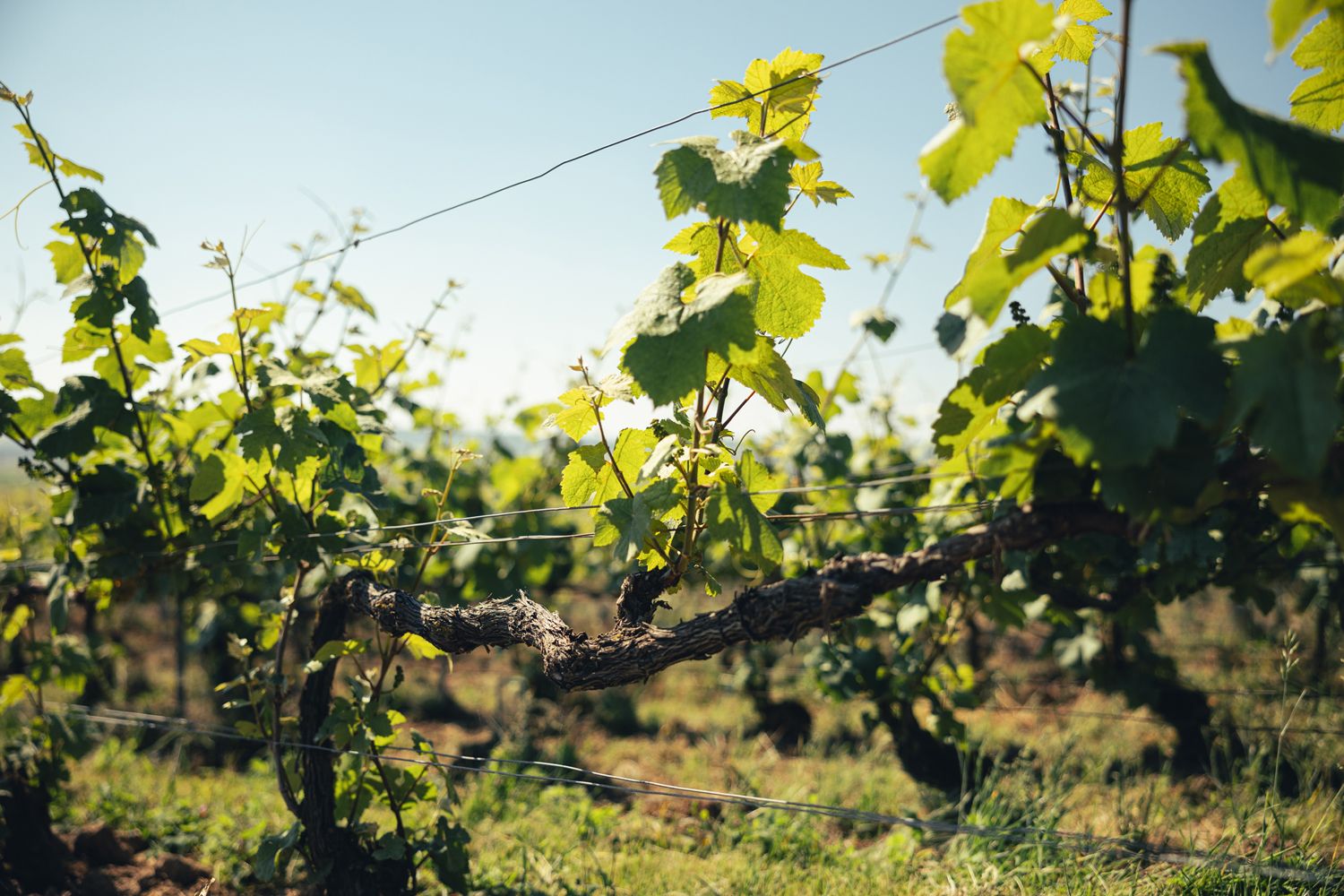
In Champagne, Reforest’Action supports Maison Ruinart in rolling out a vitiforestry project at the heart of an exceptional vineyard facing significant climate, regulatory, and landscape constraints. Vitiforestry combines tree planting with viticulture to strengthen vine resilience while enhancing biodiversity.
Designed in close consultation with the vineyard’s technical teams, the project integrates operational realities, appellation requirements, and mechanisation constraints. Since 2021, it has been deployed progressively and experimentally, enabling planting designs to be refined according to each plot’s specificities. More than 20,000 trees have already been planted through diversified agroforestry systems.
Beyond the pilot site in Taissy, the approach is intended to expand across the Champagne region, through partnerships with other winegrowers, helping to structure a replicable model in support of vineyard resilience.
Supporting the transition of arable crop supply chains in France and Poland
Cargill is a leading global food, ingredients, agricultural solutions, and industrial products company to nourish the world in a safe, responsible, and sustainable way and believe change starts where the food system begins – at the farm.
That’s why Cargill is working with farmers at every level of production, empowering them with the support and resources they need to adopt regenerative agriculture practices to produce the food the world needs sustainably while helping them improve their resilience through the Cargill RegenConnect® program. The program is grounded in conservation agriculture principles: reduced tillage, permanent soil cover, and adapted crop rotations. These practices help improve soil health and reduce the footprint of numerous agricultural commodities.
Building on this foundation, Reforest’Action supports Cargill in integrating agroforestry within arable farming systems (wheat, rapeseed, sunflower, barley, etc.) to strengthen the agronomic and environmental resilience of farms. Bringing trees back into fields helps restore functional biodiversity, improve on-farm water dynamics, limit exposure to climate stress (droughts, flooding, etc.), and enhance carbon storage within production systems.
Following two pilot years in France and Poland—combining field deployment with monitoring of carbon, water, and biodiversity impacts—the project is now entering a scaling phase. The aim is to extend this approach to downstream actors in Cargill’s value chain, fully aligned with an insetting logic. This program illustrates the ability of regenerative agriculture to reconcile economic performance, supply security, and measurable long-term environmental impacts.

As climate and water risks intensify, living-based supply chains are being called to transform in depth. Insetting is now emerging as a structuring response to these challenges, enabling companies to act directly where their commodities—and therefore their resilience levers—are concentrated.
Through its insetting and regenerative agriculture projects, Reforest’Action demonstrates that it is possible to reconcile value chain security, economic performance, and measurable environmental impacts. By relying on nature-based solutions designed to fit each supply chain and territory, insetting becomes a strategic steering tool in support of business model sustainability.
Beyond the projects themselves, a new way of envisioning the relationship between companies and ecosystems is taking shape: the possibility of moving from a logic of extractivism to a logic of regeneration. At a time when value chain resilience increasingly determines corporate competitiveness and credibility, investing in regenerative models is becoming a defining choice for the future.
Are you a company looking to evolve practices linked to the production of your raw materials? Our experts are here to discuss and support you in your thinking. Get in touch.