


Pankshin - Nigeria
Agroforestry
North-east of the city of Pankshin, capital of Plateau State, a project has been funded by Reforest'Action since 2022 and implemented on the ground by the NGO CrescenDO.
 2022 - 2023
 A financer


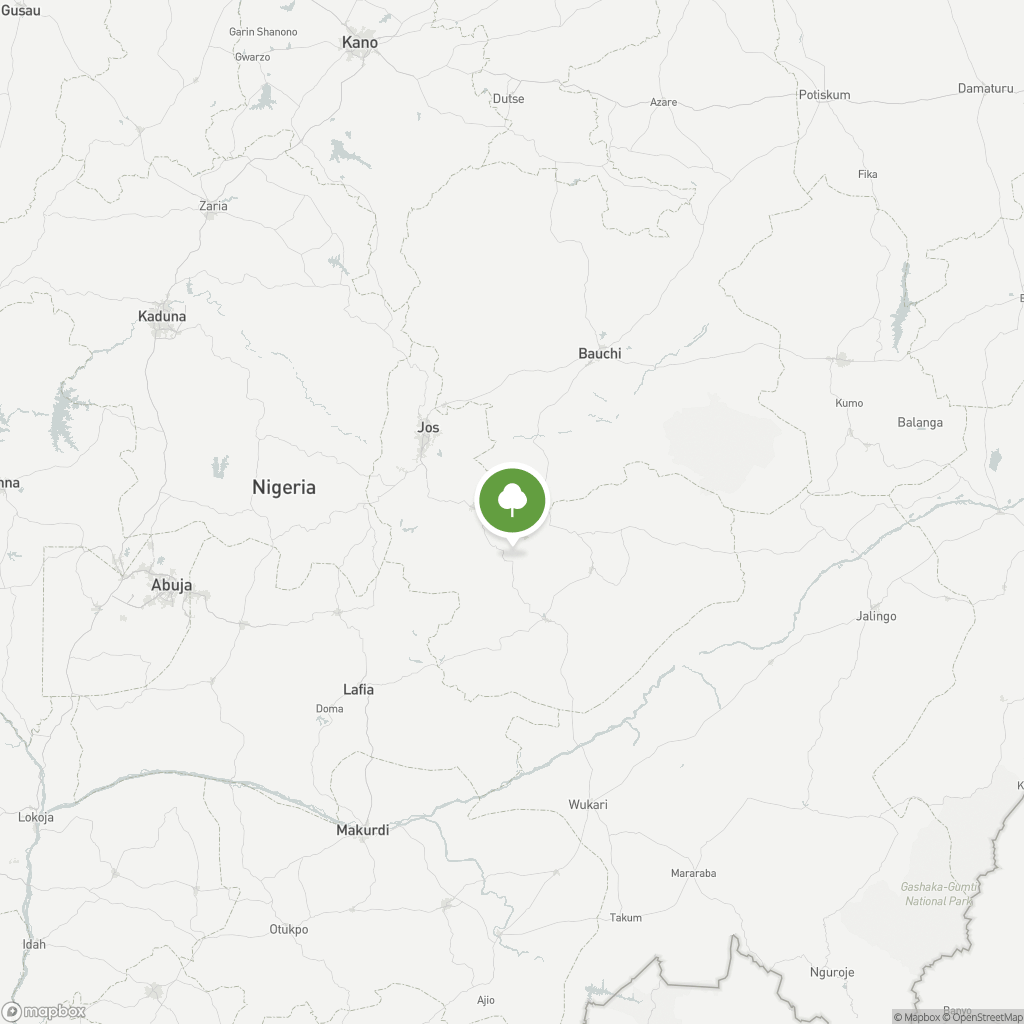


In Nigeria, one of the most deforested countries in the world, forest cover and wildlife habitats are disappearing to make way for agricultural land. At the same time, demand for wood and urban development are contributing to the overexploitation of natural resources.

Creating hedgerows around fields
Trees and shrubs are planted in hedgerows around fields to form bocage landscapes. These hedges act as “living fences” and are essential for protecting the fields of local farmers, whose crops were frequently damaged by the nomadic Fulani people, who cross the region during the dry season. Beyond their defensive and repellent role against stray livestock, hedgerows also aim to create a microclimate that is conducive to increasing crop productivity while improving their resilience. The methods used help to restore biodiversity on farmland and prevent soil erosion, with a view to more sustainable agriculture.
Combining trees and crops within fields
Trees are integrated into cultivated fields. The species have been selected to meet the communities' needs for wood, fruit, and fodder for livestock. The creation of these agroforestry systems will bring many benefits: increased food security thanks to fruit harvests from fruit trees (African elm, néré, tamarind), production of wood for cooking (gmelina, African mahogany, eucalyptus) and fodder from tree leaves (albizia, Leucaena, Samanea) to help feed the livestock of sedentary communities as well as that of the Fulani people, who will thus be able to feed their herds without damaging the crops of local farmers.
Conserving an endemic species in a mountainous area
In parallel with the project funded by Reforest'Action, our technical partner is also running a program to protect the Pankshin Hills Sanctuary, an ecological sanctuary located in a rocky mountain cirque at an altitude of 1,600 meters, which is home to a remarkable tree species, Encephalartos barteri. This endemic species, which dates back to prehistoric times, is now threatened with extinction: its total population within the sanctuary is estimated at between 300 and 1,000 individuals. In this context, our partner Crescendo has secured funding from the Darwin Initiative, a UK government grant, to help restore the Encephalartos ecosystem and regenerate this species.


