


Lilongwe - Malawi
Agroforestry
In Malawi, the agroforestry project financed by Reforest'Action and led on the field by the NGO Inter Aide aims at ensuring food subsistence and increasing the energy autonomy of local communities by integrating trees, sources of fruits and wood, around cultivated fields.
 2022 - 2023
 A financer


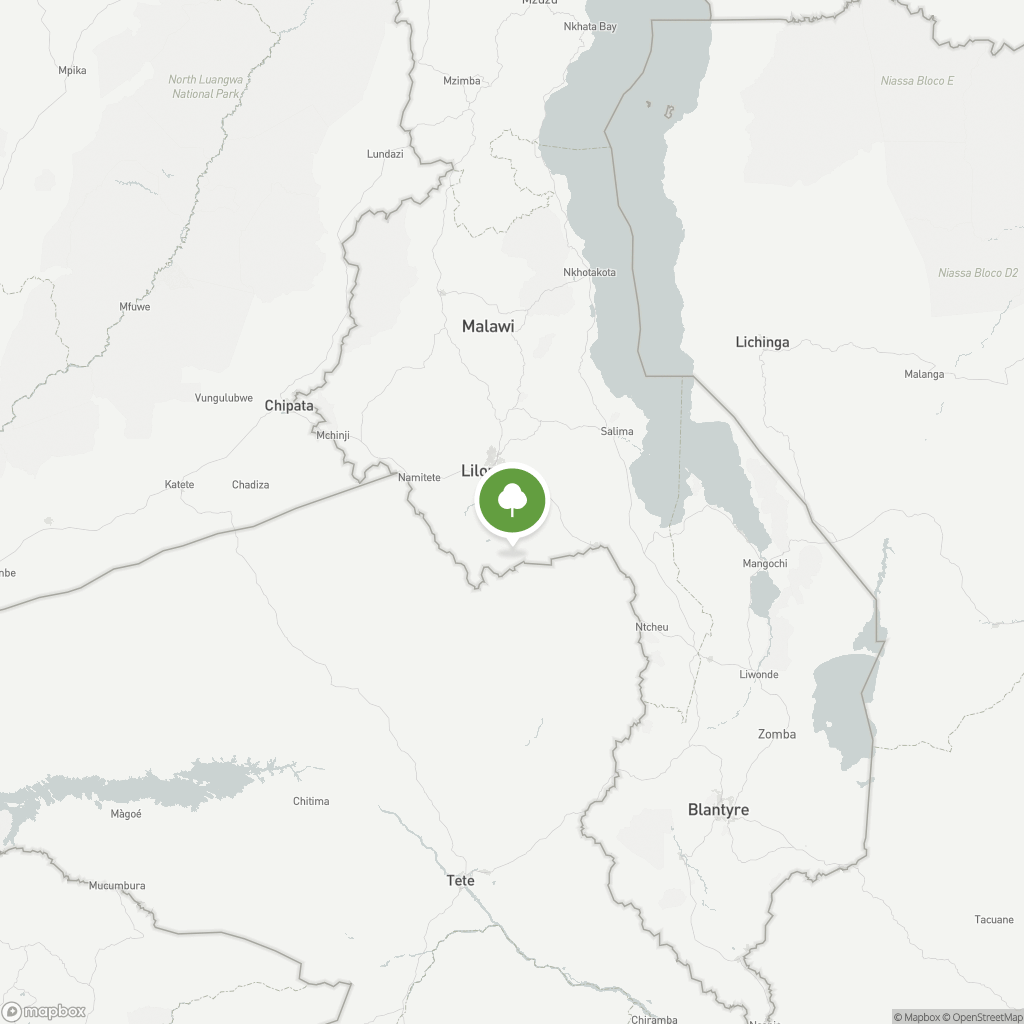


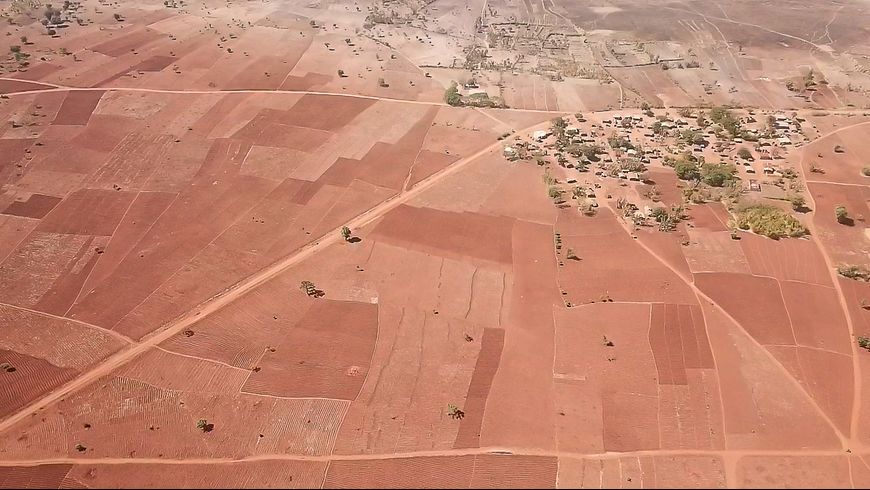
In Malawi, deforestation is responsible for the loss of about 33,000 hectares of forest per year. In this country where subsistence farming is the norm, forest cover is being lost to crops. In addition, logging to meet the population's energy needs and illegal timber trafficking, coupled with the effects of global warming, are threatening the forest and the resilience of local communities. Yet trees are a precious and indispensable resource for the population, whose density is increasing. In the rural district of Lilongwe, where the project is located, the forest has been severely degraded by human activities. The creation of agroforestry systems is therefore crucial for the livelihoods of local communities.
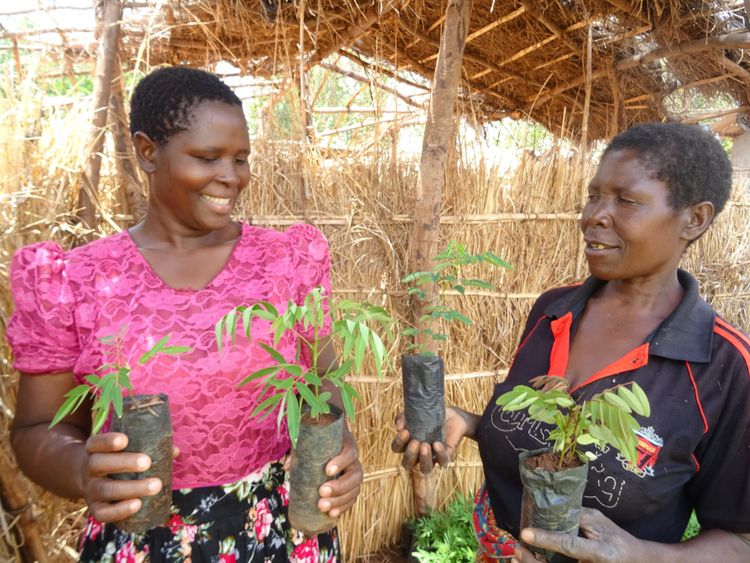
Planting takes place around heavily degraded and therefore less productive agricultural land to form hedgerows. The objective is to develop agroforestry by introducing fruit trees and wood energy producing species into cultivated land, in order to ensure the food subsistence of households and enable them to achieve self-sufficiency in terms of wood resources.
This planting scheme will restore the environmental functions of agricultural land without encroaching on the space reserved for crops.
The tree species introduced are diverse: acacia, albizia, khaya etc. Seeds and seedlings come from Malawi and are nursed before being planted in agroforestry. The maintenance of the nurseries and the trees is done by the local communities, with the support of our partner Inter Aide.
The planted trees will also help fight against soil erosion, restore soil fertility and ecosystem functions.


