COP31: what the failed negotiations mean for forest projects

COP31 ended in Antalya without a final decision, a situation unprecedented since Copenhagen in 2009. By rejecting a text that no longer named fossil fuels, the European Union and several other countries preserved the gains made in Dubai, but they also deprived the recognition of forests and nature-based solutions contained in that text of any formal standing. This failure brings to light a shift that has been under way for several years: action for forests is now being built within an implementation architecture that moves forward independently of diplomatic consensus, and whose robustness depends on the quality of the projects carried out on the ground.
A refusal that preserves past gains and takes forests down with it
On 22 November, after more than forty-eight hours of overtime that made it the longest conference in the history of climate negotiations, COP31 closed without a cover decision. The European Union, the United Kingdom, Panama and the Marshall Islands rejected a draft text that referred to the Dubai agreement as a whole without restating its call to transition away from fossil fuels, while Russia and Saudi Arabia opposed any explicit wording on that transition. For the countries that said no, endorsing the text would have amounted to accepting a step back from COP28.
This refusal is consistent with what was at stake, since it concerns the primary cause of global warming. Yet it comes at a cost that commentators have rarely noted, because the rejected text contained real progress. It would have been the first text adopted within the UN framework to acknowledge that warming is on track to exceed 1.5°C. It carried over the deforestation commitments adopted in the first global stocktake at COP28 and recognised nature-based solutions as “essential climate solutions”, even though the reference to the forest roadmap championed by Brazil, welcomed in early versions, had been removed during the negotiations. By rejecting the text as a whole, the Parties left these recognitions without formal expression this year, even as several sector-specific decisions were adopted in parallel, notably on the just transition, the Adaptation Fund and the Global Goal on Adaptation.
The lesson extends beyond Antalya. The place of nature in climate diplomacy depends on a consensus that the fossil fuel question makes more fragile every year, and forests thus become hostage to a confrontation of which they are not the subject. For those who finance, design and implement forest projects, the question now concerns where this action is actually being built, and the conditions that ensure its robustness.
Forest action has shifted its centre of gravity
The most tangible progress for forests over these two weeks took place alongside the negotiated text. The roadmap to halt and reverse deforestation by 2030, announced in Belém for lack of consensus to include it in the final decision of COP30, was presented by the Brazilian presidency outside the UN process, as a voluntary initiative. The Tropical Forest Forever Facility, a long-term mechanism designed to reward tropical countries for conserving their forests, dominated the leaders’ summit on forests: it has mobilised $8.2 billion, mostly in the form of conditional loans, and sixty-six countries as well as the European Union support the facility. It nonetheless remains $1.8 billion short of its $10 billion target for the end of 2026, a threshold on which the loan promised by Norway notably depends, and new contributions remained modest, with several countries merely reiterating existing commitments. Indonesia, for its part, pledged to stop expanding agriculture into its forests, particularly primary forests.
These commitments remain far from what is needed. The United Nations Environment Programme estimates forest finance at $84 billion in 2023, whereas around $300 billion a year would be needed by 2030 to meet the agreed targets. They nonetheless outline an architecture that advances without waiting for unanimity among the Parties, and that combines government commitments, dedicated funds and the financing that companies devote to protection and restoration projects. This last component, long regarded as secondary, is becoming one of the most direct ways to close the gap between announcements and needs, provided that the projects financed deliver verifiable results.
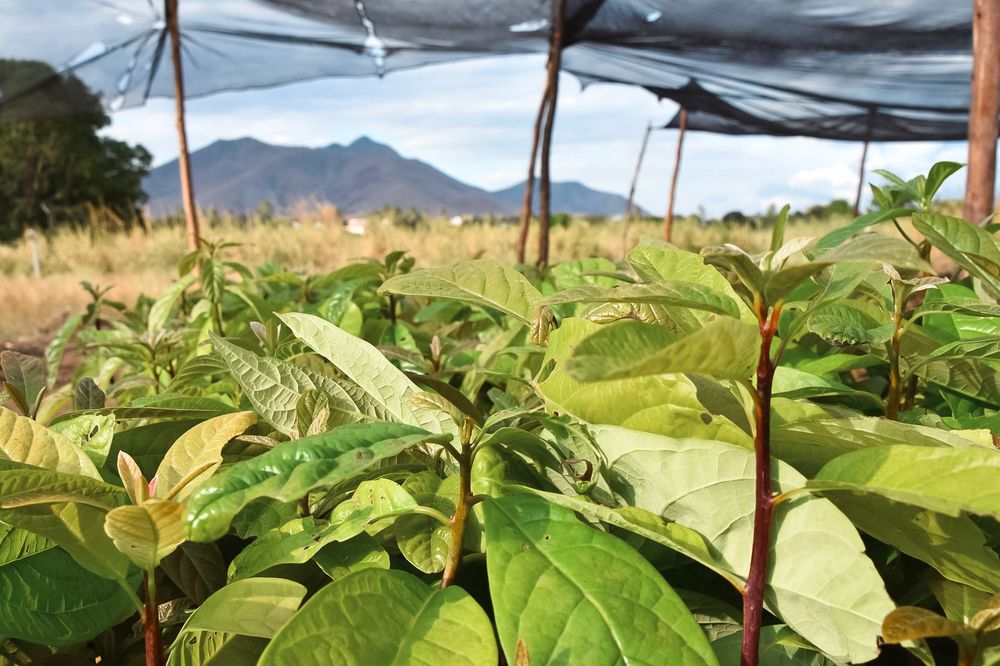
This requirement points to a dimension that announcements often leave in the shadows: the expertise needed to turn funding into measurable and lasting results on the ground. Our experience as a project developer shows that the success of a restoration project is determined at the design stage. It requires a precise identification of the causes of degradation, whether agricultural pressure, recurrent fires or insecure land tenure, since a project that leaves these causes intact rebuilds a forest cover that is bound to disappear. It calls for choosing species and silvicultural practices suited to local soils and climate projections, favouring species diversity to spread health and climate risks. Finally, it relies on long-term agreements with landowners, communities and local partners, which determine the maintenance and protection of the plots over the decades trees need to grow. It is at this scale, that of the plot, the contract and the monitoring, that the commitments made in Antalya will or will not translate into stored carbon and restored ecosystems.
In an overshoot world, natural sinks determine how long the overshoot lasts
The conference opened a month after the publication of UNEP’s annual report on the gap between countries’ commitments and the emission reductions required, which establishes that a temporary overshoot of the 1.5°C threshold is now inevitable. In the most favourable scenario still within reach, warming would peak at around 1.7 to 1.8°C by mid-century before declining, provided that global emissions are cut by 18% by 2030 and by 45% by 2035 compared with 2025 levels. The magnitude and duration of this overshoot will also depend on forests, in two ways. First, by reducing deforestation, since the emissions it causes, together with peatland fires, have pushed total CO₂ emissions to a record 43.3 billion tonnes according to the Global Carbon Budget, even as fossil emissions declined. Second, by absorbing carbon, through the restoration of forest ecosystems, which remains today the most mature carbon removal solution and the fastest to deploy at scale.
For companies, this greater role for forests comes with two requirements. The first concerns the order of priorities: in the pathway described by UNEP, emission reductions account for most of the effort, while removals serve to neutralise the emissions that cannot be avoided, and then to bring temperatures back down once the peak has passed. A strategy that presented the financing of forest projects as a substitute for reductions would therefore lose all credibility. The second concerns the vulnerability of sinks: forests absorb less carbon, and can even release it, when they suffer droughts, heatwaves and fires, which are precisely the impacts that overshoot will intensify. During the conference, the Turkish presidency also launched a voluntary action plan on wildfires, a sign that this risk is now firmly on the international agenda. The climate value of a forest project is therefore measured by its ability to retain its carbon stock in a warmer climate.
Carbon markets: a framework in place, a role for nature still to be secured
Article 6 of the Paris Agreement allows countries to cooperate on reducing their emissions by trading carbon credits, either through bilateral agreements or through a centralised mechanism under United Nations supervision, which issues credits to projects that meet its standards. The operating rules of this market were finalised in Baku in 2024, and Antalya clarified one of its consequences: the Adaptation Fund will receive 5% of the proceeds of the UN mechanism once it is fully operational. Every credit issued will thus help to finance adaptation in the most vulnerable countries. The framework exists, but the nature of the projects that will be able to enter it remains to be determined.
It is on this point that forests face a particular difficulty. To obtain credits, a project must in particular demonstrate its additionality, that is, prove that the climate benefits it generates would not have existed without it, and guarantee the permanence of storage, that is, provide assurance that the carbon will remain stored over the long term. These two requirements are legitimate, but they weigh more heavily on forest projects than on others: a forest can burn or die back, and when a community already protects its forest, a project that comes to support this effort can hardly prove that it brings an additional benefit, since the forest was preserved before it existed, even though this protection may cease for lack of resources. During COP31, several countries, including the Solomon Islands, therefore warned that these combined additionality and permanence requirements could shut most nature-based projects out of the UN market, even though such projects account for around 80% of carbon credits from the Global South. Some states consequently sought to have the standards that projects must meet to obtain credits re-examined, and potentially relaxed. This attempt was, however, rejected, and the current level of stringency will be maintained until a review of the rules scheduled to begin in 2028.
Until then, the place of nature in this mechanism will depend on demonstrating that forest projects can meet a high level of stringency, by guaranteeing the permanence of storage, preventing deforestation from simply shifting to other areas, ensuring rigorous monitoring and issuing no more credits than the carbon actually stored. Each project that meets these conditions strengthens the position of the countries that defend the place of nature in regulated markets, and protects the companies that finance it from the reputational risk attached to low-quality credits.
What the Antalya failure requires of companies and funders
The issues left unresolved have been deferred to COP32, scheduled for November 2027 in Addis Ababa. For companies committed to a climate strategy, waiting for diplomatic clarity would mean losing a year, when the frameworks needed to act already exist: the integrity labels of the voluntary market, the EU CRCF regulation and the Article 6 infrastructure. The conference clarified the conditions for their use rather than calling them into question.
The first implication concerns the place of contribution within a company’s overall strategy. UNEP’s diagnosis confirms that reducing a company’s own emissions remains the foundation of any credible pathway, and it is on this foundation that financing forest projects makes sense: it enables the company to contribute to the global effort beyond its value chain, and then to address its residual emissions through durable removals. A contribution presented outside this framework exposes the company to criticism, whereas a contribution backed by a documented transition plan strengthens its coherence.
The second implication concerns project selection. In a warming climate, the price of a credit or of a planted tree says little about its real climate value, which is determined by the project’s design. A company would do well to check that baseline scenarios are conservative and do not overstate the expected impact, that a buffer reserve of credits is set aside to cover losses from fires or dieback, that monitoring combines remote sensing and field measurements throughout the commitment period, that verification by an independent third party is planned, and that revenues durably involve local communities in protecting the plots. These safeguards fall within the risk management provided by the developer, which enables the company to commit on a solid footing.
The third implication relates to the time horizon. A restored forest takes several decades to reach its full storage capacity, and the most robust projects rely on multi-year financial commitments that make it possible to maintain plantations, replace losses and sustain monitoring. Companies that commit over this timeframe contribute directly to closing the gap between the $84 billion currently devoted to forests and the needs identified by the United Nations.
In 2009, the failure in Copenhagen led to a rethink of the architecture of the negotiations, and the Paris Agreement was built six years later on contributions defined by each country rather than on targets imposed from above. Antalya could play a comparable role for forests by confirming that their protection and restoration now advance through projects and dedicated funds, regardless of the vagaries of consensus. This shift gives actors on the ground, and those who finance them, a new responsibility: to demonstrate, project by project, that forests can durably store the carbon the world will need to return below 1.5°C.